
What a traditional CMS website actually means
The traditional model couples your content management system to your frontend presentation layer. WordPress, Squarespace, Webflow: all variations of the same pattern. The CMS handles both where your content lives and how it's displayed. That coupling is efficient at the start: one system, one login, one platform to maintain.
But it creates a ceiling. Your design is constrained by what the theme permits. Your performance is tied to how the platform handles rendering. Your ability to scale depends on what the CMS supports, and what it doesn't support requires workarounds that compound over time.
For many sites, this is fine. The ceiling is high enough, and the trade-off is worth it. For brands where design precision, editorial independence, or performance are non-negotiable, it's not.
What headless architecture actually changes
Headless decouples the two layers. Your content lives in a structured CMS like DatoCMS and your frontend is built separately using a modern framework like Next.js or Nuxt. The two communicate via API. That separation means your frontend can be engineered with complete precision: no theme constraints, no platform ceiling.
Your content team works in a structured editorial environment that's purpose-built for how they actually operate, not a generic CMS interface adapted from someone else's workflow. Editors update content. The frontend handles how it looks. That separation is what protects brand consistency at scale.
Headless doesn't mean harder for editors. A well-structured content model gives teams more independence, not less, because the editorial interface is built around how they actually work.
The real differences that matter in practice
Design precision
In a traditional CMS, you design to the theme. In a headless build, you design to the brand. Every component is purpose-built: no approximations, no gap between what's designed and what ships. For premium brands, this distinction is significant.
Editorial control
Paradoxically, headless often gives content teams more independence than a traditional CMS. A structured content model in DatoCMS means editors can update, publish, and manage content without touching layout or risking visual consistency. Day-to-day updates, seasonal content, gallery changes: all handled without raising a support ticket.
Performance
Next.js with static generation produces fast, cacheable pages. Traditional CMS platforms often render dynamically on every request. The performance difference compounds at scale, and performance directly affects both user experience and search visibility.
Scalability
Headless platforms absorb growth cleanly. New content types, new integrations, new pages, all absorbed without rebuilding core systems. The platform grows with the business rather than requiring a rebuild every time requirements change.
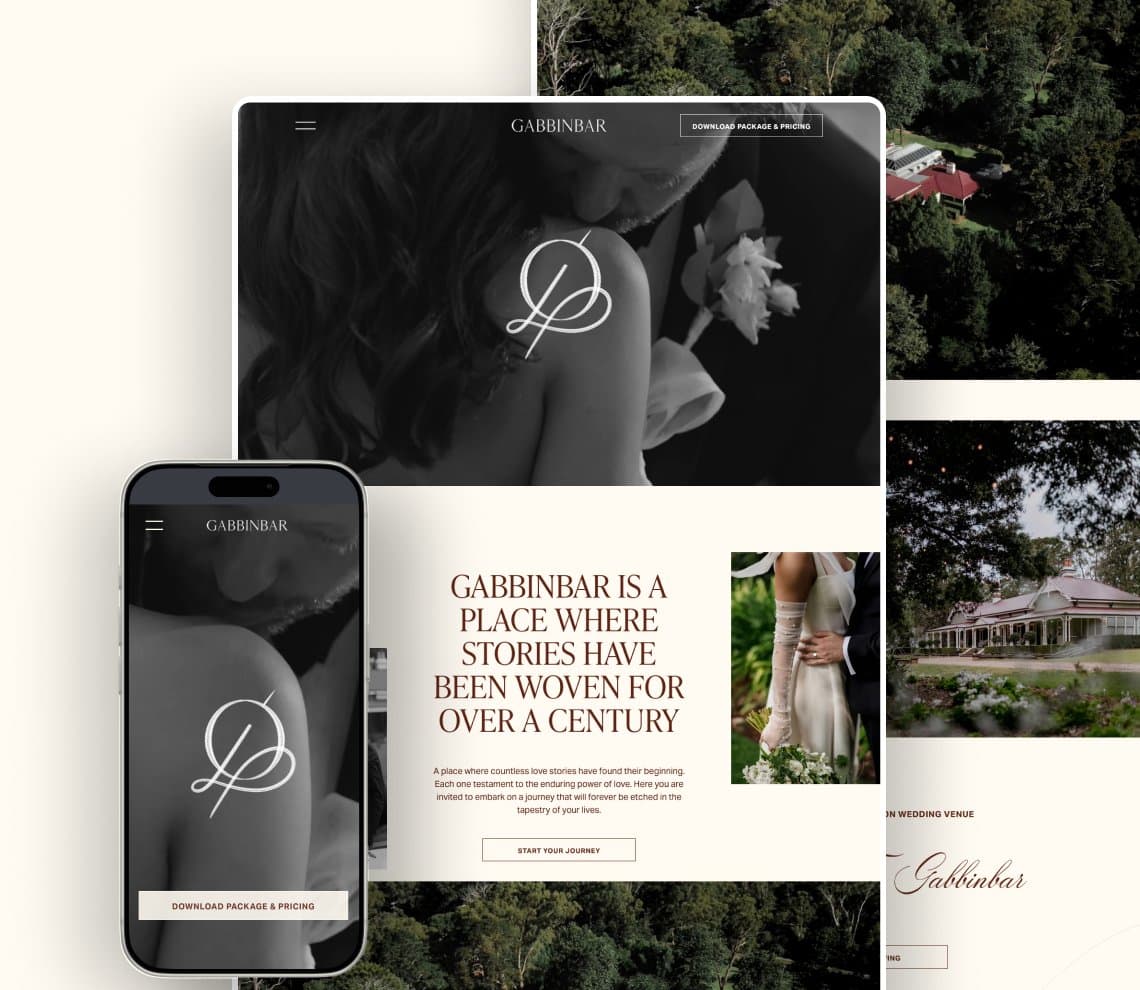 From our workWe built Gabbinbar Homestead's custom headless platform on Next.js and DatoCMS.Read the case study
 When headless makes sense
Not every site needs headless architecture. But the case for it becomes clear when certain requirements are present:
- The brand requires design precision that a theme can't deliver
- The content team needs genuine editorial independence post-launch, with no developer dependency for day-to-day updates
- The platform is expected to scale significantly: new content types, new integrations, new markets
- Performance is a genuine business requirement, not just a nice-to-have
- The gap between what's designed and what the current platform can deliver is visible and frustrating
For Gabbinbar Homestead, the case was clear: a premium Queensland wedding venue where visual identity is central to the product, and where the team needed to manage content independently. A headless platform was the only answer that didn't involve ongoing compromise.
We build headless platforms for brands across Australia and internationally, working with teams who need design precision, editorial independence, and a platform built to last beyond the initial launch.
When it doesn't
Headless has a higher setup cost: in time, in architectural thinking, and in choosing the right team to build it. It's not the right answer for every project.
- Simple sites with low content complexity: a traditional CMS is faster and sufficient
- Teams without the capability to work with a structured CMS, since the editorial benefits require the right content model
- Very tight timelines where a templated solution genuinely covers the requirement
The honest question is: what does this platform need to do in two years? If the answer involves significant growth, evolving design requirements, or editorial independence, headless is the better investment.