
COR Health — End-to-End Connected Health Platform
Full-stack product engineering from hardware to cloud: IoT device integration, real-time sensor pipelines, cloud infrastructure, an AI-assisted ESR inflammation analysis model, and the consumer-facing product — all engineered as one system.
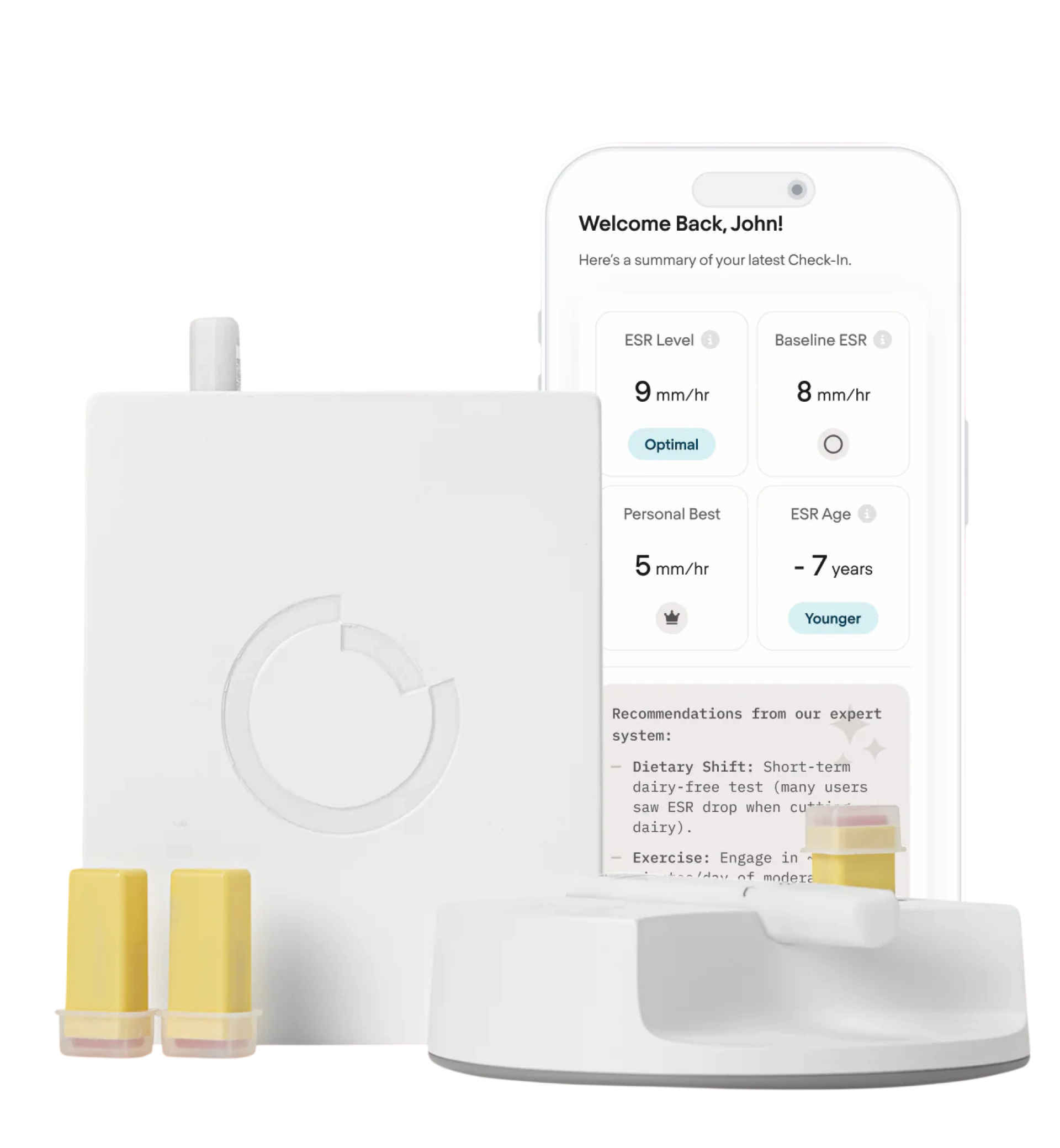
COR Health is building a connected health device — the COR One™ — a home blood test that measures Erythrocyte Sedimentation Rate (ESR), a key marker for inflammation. Before it could reach patients, it needed a complete technical platform: device integration, data pipelines, AI-assisted analysis, cloud infrastructure, and a consumer-facing app.
No single piece of this could be built in isolation. The device, the data, the analysis model, and the product all had to work together — which meant COR needed a partner who could think and build across the entire stack, not just execute a slice of it.
Take end-to-end ownership of the technical platform. That meant hardware integration, sensor data pipelines, IoT cloud infrastructure, an AI-assisted ESR inflammation analysis model, and the consumer-facing digital product — all engineered as a unified system, not a collection of separate components handed off between teams.
The architecture was designed for reliability and scalability from day one — built for a clinical validation pathway and the kind of data integrity that FDA review requires.
What We Built
A connected health platform spanning every layer of the stack: IoT device integration with the COR One™ hardware, real-time sensor data pipelines, cloud infrastructure built for clinical data integrity, an AI-assisted ESR inflammation analysis model, and the consumer-facing mobile product that ties it all together.
Every component was built to communicate cleanly with the next. Hardware signals flow to data pipelines. Pipelines feed the analysis model. Model output surfaces in the consumer product. A complete system, not a patchwork.
The technical challenge across every layer
The COR One™ device needed to communicate reliably with the cloud platform — sensor data captured, validated, and transmitted with the consistency a clinical product demands. Device-to-cloud integration was the foundation everything else was built on.
An ESR analysis model built for clinical-grade accuracy requires more than off-the-shelf ML. The model was trained, validated, and tuned against clinical data — built for a product on a path toward FDA validation, not a prototype.
COR didn't need three separate specialists handing work off between layers. They needed one partner who could own the full system — and make architectural decisions that held up across hardware, cloud, AI, and product simultaneously.
Clinical-grade ESR inflammation analysis — built for FDA validation
The ESR analysis model is the technical centrepiece of the COR platform. It processes sensor data from the COR One™ device and outputs an inflammation analysis result — built for clinical meaningfulness, not as a research prototype.
The model was built with a validation pathway in mind from day one. Architecture, data handling, and output logging were all structured to support the FDA submission process — not adapted after the fact.
How we approach AI development →
The Result
COR Health now has a complete connected platform — from the device in a patient's home through to the AI model that interprets their data and the consumer product that delivers the result. Every layer engineered to work together.
The platform is on a clinical validation pathway toward FDA submission. The technical foundation was built to support that journey from the start — not retrofitted to meet it. And the engagement continues: we stay after launch and contribute to ongoing technical decisions as the product evolves.
“We partnered with Code Pros to launch our new product, the COR One, which required full-stack engineering to bring it to life. Ankit and team exceeded expectations. Hardware is notoriously hard, and the COR One was no exception. Code Pros rose to the challenge. I would recommend Code Pros to anyone needing the highest quality on a tight timeline.”Bob MesserschmidtFounder — COR HealthRead the full review on Clutch →
COR spans every layer of a connected health product. Here's what that stack actually involves — from hardware to consumer product.
The AI layer in COR is a production system, not a demo. Here's what makes the difference.
How we approach connected product engineering — from device integration through cloud and consumer product.
Building a connected product that spans hardware and software?
We've engineered connected health platforms end to end. If your product lives at the intersection of hardware, cloud, and consumer software, let's talk.