
SiPhox Health — Unified Consumer Health Platform
SiPhox needed their Shopify store, content system, and biomarker data experience to work as one coherent platform. We built the API integration layer that ties it all together — a unified consumer product built on Next.js and React.

SiPhox Health is an at-home blood testing platform — painless biomarker testing with personalised health insights and trend tracking. By the time they came to us, they had the hardware and the science. What they didn't have was a cohesive digital product.
Their Shopify store, content system, and consumer biomarker data experience all existed in isolation. A customer ordering a test kit, reading health content, and checking their results was touching three disconnected systems. The platform felt like exactly what it was — not a product, but a patchwork.
Build an API integration layer that ties every system together behind a unified Next.js and React consumer platform. Commerce, content, and health data — all accessible through one coherent product experience, with no seams visible to the user.
The architecture was API-first from the start: clean boundaries between systems, no fragile glue code, and a structure that could be extended as the platform grew. Integration built to last, not just to ship.
What We Built
A unified consumer health platform: a Next.js and React frontend connecting SiPhox's Shopify commerce layer, content system, and biomarker data experience into a single cohesive product. Dashboards surfacing health data, personalised insights, and trend tracking — all accessible through one interface.
Every integration was built API-first. Shopify handles commerce. The content system handles editorial. The biomarker pipeline handles data. The consumer frontend brings them together — and none of that complexity is visible to the person using it.
The integration challenge across disconnected systems
Shopify handled the test kit purchase flow. Connecting that cleanly to a health data experience — so a customer's order state, kit registration, and results were all in context — required more than a standard Storefront API integration.
Surfacing clinical biomarker data to consumers requires careful UI design and reliable data architecture. Dashboards needed to present health trends in a way that was clear, accurate, and actionable — not just technically functional.
SiPhox didn't need three separate interfaces. They needed one product that felt unified — with all the backend complexity handled at the integration layer, invisible to the consumer on the other side.
API-first — built for clean boundaries, not quick connections
The integration layer is the technical core of the SiPhox platform. Rather than coupling systems together directly, we built clean API boundaries between Shopify, the content platform, and the biomarker data pipeline — each system responsible for its own domain, connected through a structured integration layer.
That architecture means new systems can be added, existing systems can be swapped, and the consumer product doesn't need to change when the backend does. Built to last, not just to connect.
How we approach platform engineering →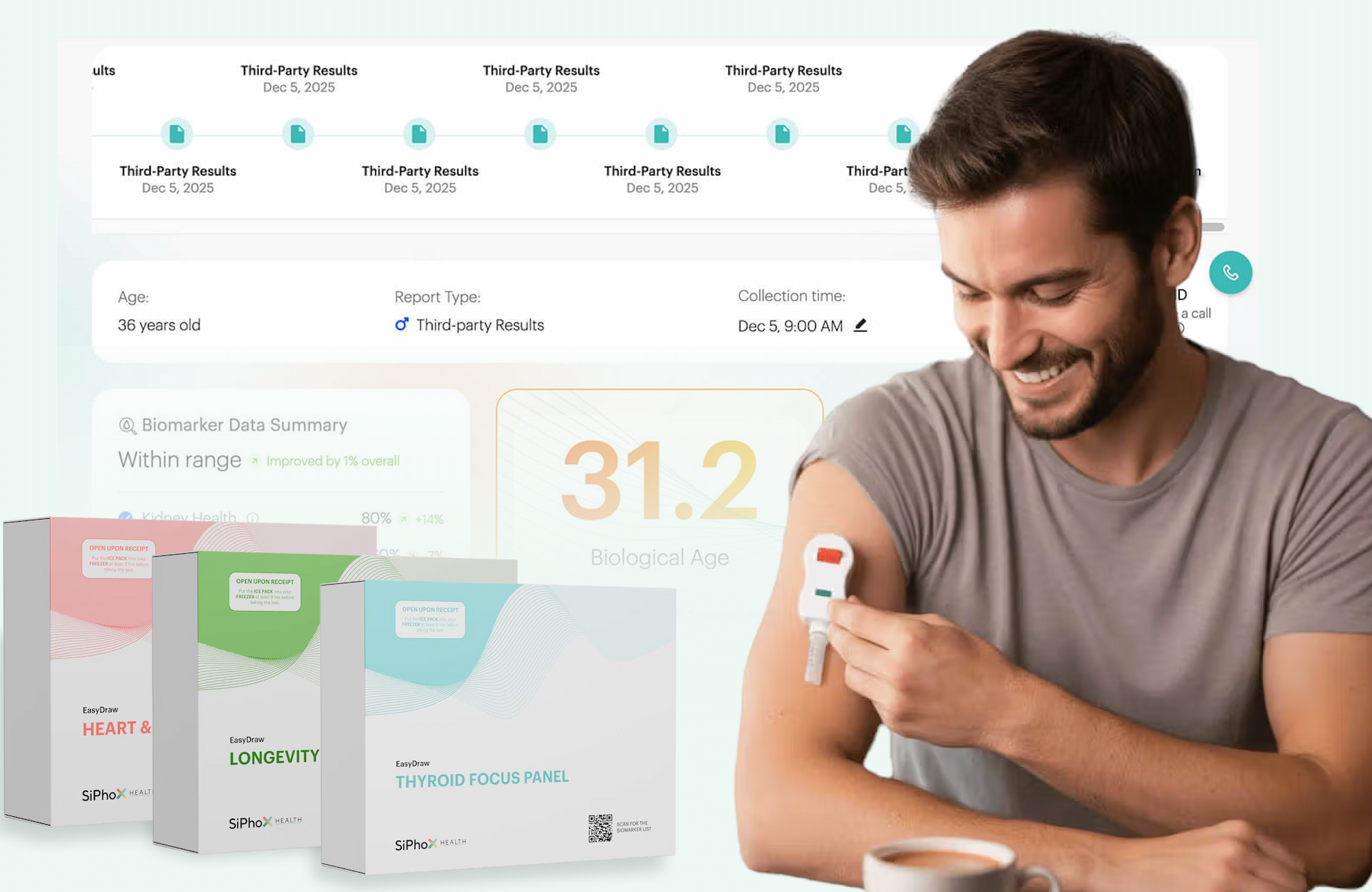
The Result
SiPhox Health now has a consumer platform where commerce, content, and health data work together as one product. A customer can order a kit, register it, track their results, and read relevant health content — all without experiencing the three-system complexity underneath.
The integration layer we built gives SiPhox a foundation they can extend — not a set of connections they have to maintain carefully to avoid breaking.
SiPhox is a web application problem, not a website problem. Here's how to tell the difference — and what it means for architecture.
SiPhox is built on Next.js. Here's why the headless approach was the right architectural call for a platform connecting multiple backend systems.
How we scope and build web applications — from architecture through production deployment.
Building a platform that needs to connect disparate systems cleanly?
We specialise in API-first architecture that makes complex integrations feel invisible to end users. If you're dealing with disconnected systems, let's talk.